Introducing the Tune-o-Matic® Tailpiece
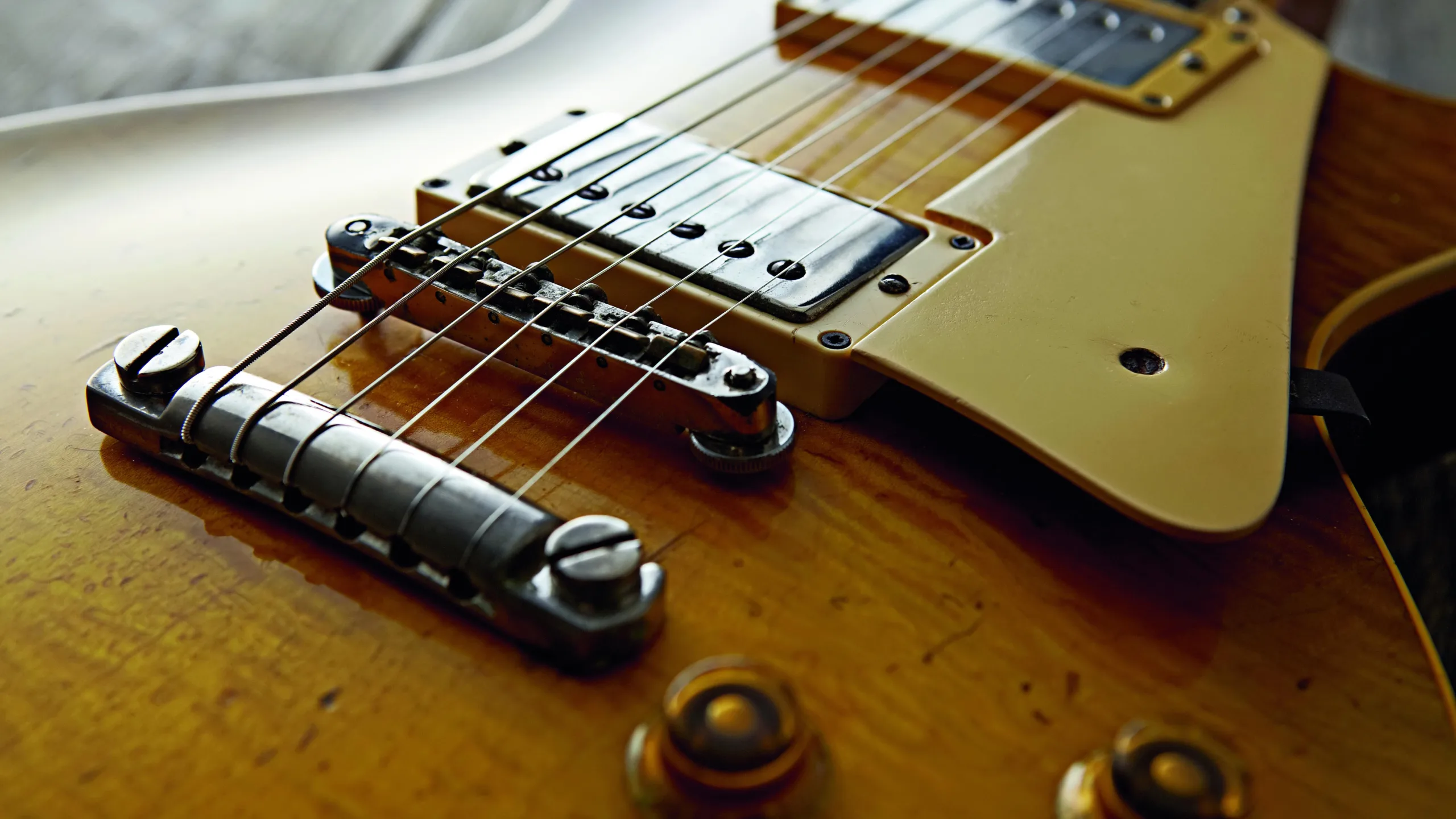
The Tune-o-Matic bridge system was introduced by Gibson in 1954, first appearing on the Les Paul Custom model. Prior to this, Gibson guitars used wraparound tailpieces, where the strings wrapped over a single bar that combined the bridge and tailpiece functions.
The Tune-o-Matic was a major leap forward in adjustability in the way it separated the bridge from the tailpiece. The bridge (with individually adjustable saddles) handled intonation, and the stopbar tailpiece served to anchor the strings. This allowed precise adjustments to each string’s vibrating length, allowing for perfect intonation on each and every setup.
Over the years, the Tune-o-Matic became the standard on many LP, SG and ES type guitars like Gibson Les-Paul models, including the SG and ES-335. It remains the go-to for modern day Les Pauls. And while its original design falls into the “if it ain’t broke, don’t fix it” column, guitarists never stop tweaking in search of better tone. Find in our e-shop a wide variaty of guitar parts, tools and accessories for all your needs.
Enter the Top-Wrappers.
What is top-wrapping?
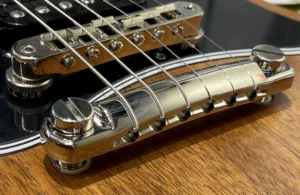
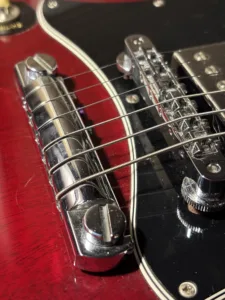
Top-wrapping is a technique that involves restringing the guitar so that the strings feed through the Stop Bar tailpiece from the bridge side, rather than being fed through it from behind in the conventional manner. A little extra string length is introduced, since you’re threading the string in the opposite direction, wrapping it over the tailpiece, and, finally, the bridge saddles. As a result, in order to try top-wrapping, you might need to use a new set of strings rather than restringing with your existing set.
As guitar modifications go, it’s one of the simplest we can think of. It’s also completely reversible. But why do so many guitar players do it? And can it cause string breakages or other issues?
Who top-wraps their guitar, and why?
Top-wrapping is a stringing technique that has been used by many famous guitarists over the years, including Billy Gibbons and Joe Bonamassa, who recently explained his method of top-wrapping strings to Dinesh on the Gibson Gear Guide. The reasons why guitar players top-wrap can vary, but Bonamassa top-wraps all of his Gibson Les Pauls because he believes it gives them a slinkier playing feel, akin to swapping a set of 11-gauge strings for a set of 10.5s. But why would this be the case?
First and foremost, a Stop Bar tailpiece is designed to provide an anchor point for the strings. It is also height-adjustable to ensure that the strings have a suitable break angle over the saddles. Some players believe that screwing the tailpiece down tight to the body creates a more direct connection between the guitar and the strings, enhancing sustain and tone. However, this may create too sharp a break angle over the bridge saddles, or put too much pressure on fragile vintage bridges.
Top-wrapping is regarded by many as a best-of-both-worlds solution here because you can screw the tailpiece all the way down, while the strings retain a shallower break angle over the bridge. This delivers the perceived benefits of tailpiece-to-body coupling with less downward pressure on the bridge and reduced string tension.
Does it sound or feel different? What does the science say?
Whether top-wrapping makes a difference in sound or feel is a lively debate among guitar players. Some players claim it improves the guitar’s tone and sustain, while others believe any differences are too subtle to notice.
In the following video by DylanTalksTone, the YouTuber tests a Les Paul using a spring scale tension gauge and determines that bending a string up a whole step takes more tension than when the guitar is strung up the traditional way. He finds this surprising, having expected the opposite.
The debate
A debate on The Les Paul Forum explores this further, with forum member B Ingram explaining why he believes the strings might feel slinkier with top wrapping even though they require more tension when bending. He writes:
“After top-wrapping my strings felt slinkier (I can now bend a perfect-fourth or further on the D & G strings). There’s a difference between tension and elasticity. String gauge, scale length, and tuning pitch set tension of the string (or you might say, ‘The pitch is the byproduct of string gauge, scale length and string tension’).
“But materials have some degree of elasticity. The elasticity is a constant-per-unit-of-length for the material. If you have 30ft of a string, it bends and stretches more easily than three inches of the string, after being tuned to the same pitch. The total length of the string (including that beyond the nut and beyond the saddle) contributes to the total elasticity/slinkiness, unless the string is locked at the nut and/or saddle.
“If you’ve ever been around a large ship, you already know this. The big woven nylon ropes used to moor big ships to a pier are also used (in a short length) for tug of war. When playing tug of war, pulling that line yanks forward the other team. But when a several hundred feet of the same line moor a ship to the pier, the line will stretch 20-40 feet or more. Per-unit-length elasticity is the same, but the longer total length yields more slinkiness.
“Top-wrapping slightly increases the total string length, which is why it slightly increases slinkiness.”
Can top-wrapping be bad for your guitar?
Top-wrapping is generally considered safe for guitars, but it’s important to note that it can change the tension over the guitar’s bridge and affect the intonation —though this should be easily remedied with a touchup to your setup.
Some players have reported that top-wrapping caused their guitars to go out of tune more easily. Some guitar manufacturers may not recommend top-wrapping, and doing so could void the warranty. Over time, there’s also the possibility that the friction of the wrapped part of the string rubbing against the tailpiece could cause additional wear and tear, too.
While some players swear by it, no comprehensive scientific evidence supports claims that top-wrapping improves the guitar’s tone or sustain—that may come down to the individual instrument and many other factors. In the Rob Galley video above, he concluded that he couldn’t distinguish between traditional and top-wrapping methods. Your findings may vary.
It’s important to consider the potential effects on your guitar’s bridge tension and intonation before deciding to top-wrap your guitar, and we’d always recommend that you consult with a professional guitar tech or luthier if you have any doubts or concerns. There’s nothing wrong with leaving an instrument totally stock, though many of us are tinkerers by nature. Nothing wrong with that, either.
Overall, top-wrapping can be a valuable technique for guitar players looking to experiment with different tones and feels—it also has a different visual appeal. While the science behind it is inconclusive, you should be the judge. After all, it costs nothing to try it. Let your ears guide you toward what sounds best and what feels right when you play. The majority of instruments from Epiphone and Gibson use a Stop Bar tailpiece, which will allow you to experiment with this concept. Give it a shot!
Electric Guitar Strings: Why Changing Them Regularly Matters
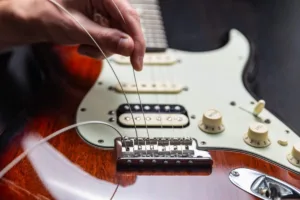
If you’re serious about your tone, your electric guitar strings deserve more attention than you might think. Strings are the direct link between your hands and your sound, and over time they wear out, lose brightness, and affect your overall performance. Regular string changes aren’t just about maintenance—they’re essential for achieving the best possible sound and playability.
- Fresh Feel, Better Performance
Nothing compares to the feel of a fresh set of electric guitar strings. New strings are smoother, more responsive, and easier to play. Old strings, on the other hand, accumulate dirt, sweat, and oil from your fingers, making them feel rough and sluggish. This can slow down your playing and make techniques like bending and vibrato less precise. Also avoid using coated strings that “last longer” unless you want your tone to be like mud. - Improved Tone and Clarity
One of the most noticeable benefits of changing your strings regularly is the improvement in tone. Fresh strings deliver a bright, clear, and dynamic sound, allowing your guitar to cut through the mix. As strings age, they lose their high-end sparkle and begin to sound dull and lifeless. If your tone feels “muddy,” worn-out strings are often the culprit. - Better Intonation and Tuning Stability
Old strings don’t just sound worse—they also affect your guitar’s accuracy. Worn strings can cause intonation issues, meaning your guitar won’t play perfectly in tune across the fretboard. Additionally, they struggle to hold tuning, leading to frequent adjustments and frustration during practice or live performances. New strings stretch evenly and settle quickly, offering reliable tuning stability.
How Often Should You Change Strings? The ideal frequency depends on how often you play.
- Daily players: Every 1–2 weeks
- Regular players: Every 3–4 weeks
- Occasional players: Every 2–3 months
If you notice rust, discoloration, or a dull sound, it’s definitely time for a change. Strings are meant to be changed frequently. Do not wait until it breaks..
Tips for Longer String Life
- Wash your hands before playing
- Wipe down strings after each session
- Store your guitar in a clean, dry environment or use a guitar hard shell case
- Use string cleaners like the Dunlop 6582 Ultraglide String Cleaner or other conditioners
Final Thoughts
Changing your electric guitar strings regularly is one of the simplest ways to improve your sound, feel, and overall playing experience. Whether you’re recording, rehearsing, or performing live, fresh strings ensure you get the best tone and reliable tuning every time.
Cleaners and Maintenance
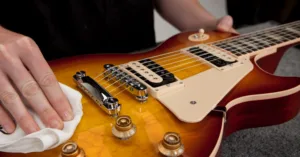
Today, there is a wide range of products available for the proper guitar maintenance and cleaning. Depending on the area and the type of surface you want to clean, there is a corresponding product. For example, if you want to revive the color of your dark wood fretboard – usually rosewood – then the suitable cleaning fluid is lemon oil (*not suitable for light-colored woods like maple). If you desire to restore the original gloss to the body of the guitar, then the guitar cleaner/polish to use is the DUNLOP 65 Formula. A minimal amount on a cleaning cloth can work wonders, removing dirt or fingerprints, restoring the original shine to polished surfaces. Another popular product is string cleaner. Use DUNLOP 6582 Ultraglide string cleaner to maintain your string set always fresh, extending their lifespan with a simple application after each use. The cleaner features a special applicator surface to deposit only the necessary amount while preventing it from drying out at the same time.